
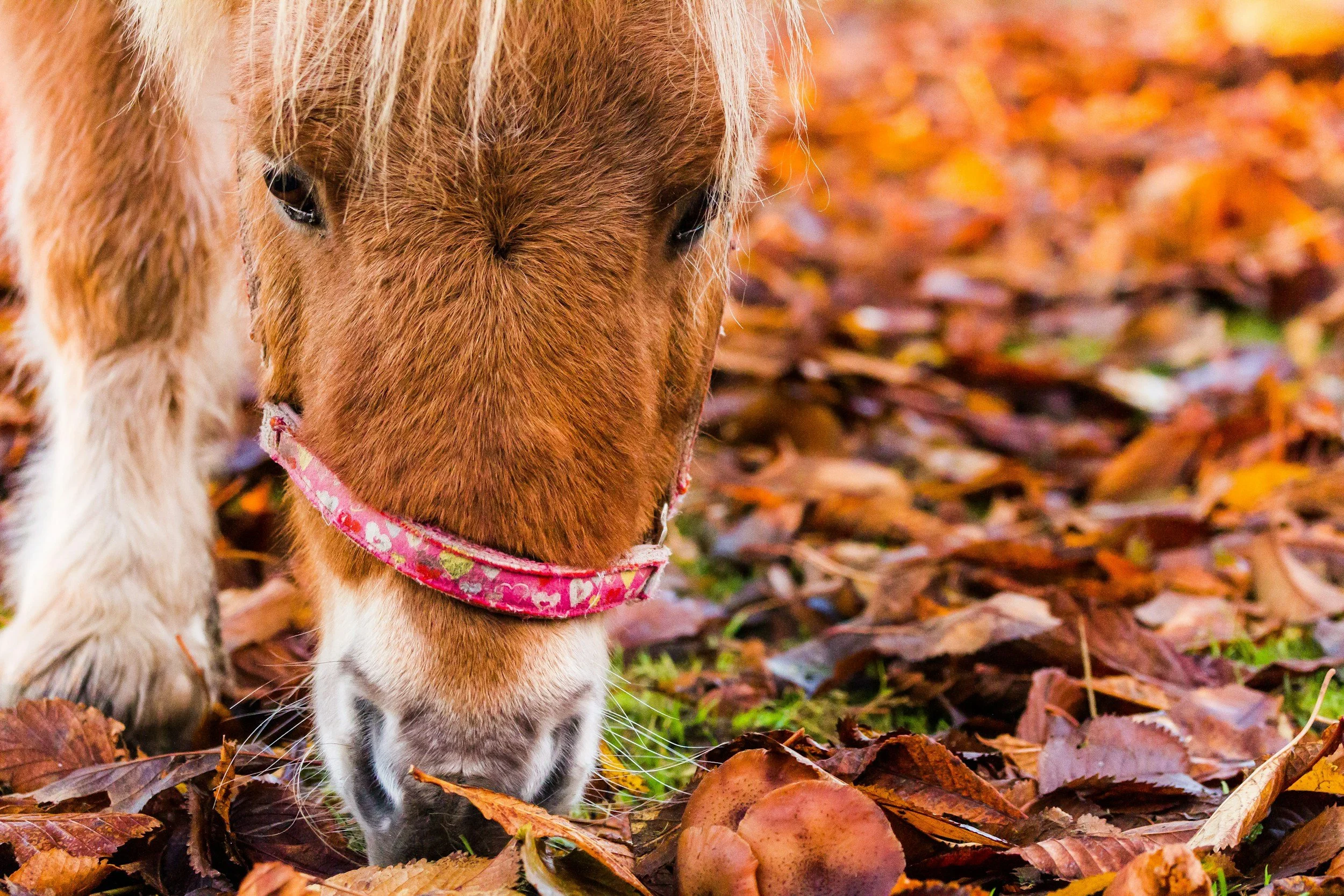
Why Your Horse Needs an Autumn Physiotherapy Check-Up and Preparing for the UK Winter Shift
As October brings cooler temperatures, waterlogged fields, and changing routines, our horses face their biggest physical transition of the year. Swapping summer sheets for heavy turnout rugs, spending longer hours in the stable, and navigating deep, slippery mud place unique mechanical strain on your horse's body.
Walking and turning through heavy UK mud places intense strain on flexor tendons and the sacroiliac (SI) joint, while sudden slips in gateway paddocks often lead to hidden pelvic misalignments. Combined with heavy winter rugs that restrict shoulder movement and cold joint stiffness from extra stabling hours, autumn is a prime time for micro-strains and back soreness to take hold.

Why Pain and Noise Sensitivity Go Hand-in-Hand
Did You Know? Noise Sensitivity Is Often Linked to Pain
With fireworks season approaching, many dogs suffer through anxious, noisy nights. But did you know that sudden sound reactivity is frequently driven by underlying physical pain or joint stiffness? When a dog hears an explosive bang, their body undergoes an involuntary neuromuscular startle reflex. Muscles across the neck, back, and limbs violently brace and lock without warning. If your dog already has hidden joint soreness or spinal tightness, this sudden, high-velocity contraction triggers an acute muscle spasm and a sharp spike of pain. Over time, the brain connects the terrifying noise directly with bodily suffering, turning mild sound awareness into a severe, ingrained phobia.
What’s Included in a Post-Fireworks Physio Session 🐾
A dedicated post-fireworks physiotherapy check-up focuses on breaking that traumatic pain-fear loop and resetting your dog's nervous system. During a session, we provide:
Full Stance & Gait Assessment: Evaluating movement patterns to spot subtle lameness, asymmetry, or compensatory postures caused by sudden startle movements or slips.
Hands-On Soft Tissue Scan: Locating hidden micro-strains, tight fascia, myofascial trigger points, and localized muscle guarding.
Targeted Manual Therapy & Myofascial Release: Gentle massage and soft tissue techniques to soothe locked muscles, improve circulation, and flush out accumulated metabolic waste.
Gentle Joint Mobilization: Restoring full range of motion to hips, shoulders, and spinal segments that braced during hours of tension.
Nervous System Reset: Soothing hands-on techniques designed to down-regulate an overstimulated "fight-or-flight" response.
Tailored Home Plan: Practical guidance on gentle stretches, heat therapy, and home care to support ongoing recovery.
👉 Help your dog recover, release deep muscular tension, and reset after fireworks night.

Discover how your horse may be telling you they are due their physiotherapy session
As prey animals, horses naturally hide weakness. Long before an obvious limp appears, physical pain often shows up as subtle (or explosive) shifts in behaviour and temperament.
When chronic discomfort from kissing spines, ulcers, or an ill-fitting saddle keeps a horse in constant "fight or flight," their stress bucket quickly overflows. Common red flags like girthiness, bucking, or napping are often cries for help rather than disobedience.
Veterinary physiotherapy identifies hidden compensatory strain, releases painful muscle spasms, and resets the nervous system. By addressing the root physical cause of behavioural changes, we relieve pain, restore movement, and rebuild a trusting partnership.

The Hidden Link: Why Your Dog’s “Bad” Behaviour Might Actually Be a Cry for Help
Most owners call a trainer when their dog starts growling at the front door, refusing to jump into the car, or acting restless in the evenings. We’ve been taught to look at these as "behavioural choices," but what if your dog isn’t being stubborn, what if they are simply hurting?


Canine exercise- Walk over poles on the ground
Pole work for dogs is a training technique often used in canine sports, rehabilitation, and fitness routines. It involves guiding the dog through a series of poles (either on the ground or elevated) in a specific pattern. This type of exercise engages various aspects of the dog's anatomy, improving balance, coordination, strength, and flexibility.
Level 1

Canine exercise - Down to stand
A "lie down to stand" transition is important for dogs because it involves a combination of physical and mental skills that contribute to their overall health, well-being, and training. For dogs in competitive sports or working roles (like service dogs), the ability to quickly and efficiently transition between lying down and standing is a useful skill that can be part of their training. In short, the "lie down to stand" movement is more than just a basic skill—it's a way to keep dogs physically healthy, mentally engaged, and responsive in their training.
Level 1.

Canine exercises - Sit to stand
Sit to stand is the classic squat exercise for our dogs. The aim of this exercise is for our dog to be sat square and stood square. Level 1.


Barefoot or shod?
There is always a large debate wherever you go as to whether it is better for your horse to be barefoot or shod. It is important to remember that every horse is an individual and should be treated as such. Find out more in this blog

Stem cell therapy
Stem cell therapy is the cutting-edge of alternative treatment for a range of conditions, find out more in this blog.

Legg-Calve-Perthes Disease
Legg-Calve-Perthes Disease (LCP) causes a lack of blood flow to the femoral head within the hip which causes necrosis and severe lameness. This is (mostly) a genetic condition however in serve cases can be caused by injury.
Physiotherapy will be required whether you opt for conservative management in mild cases to help with compensatory muscle abnormalities or if you undergo surgery. The surgical procedure removes the femoral head to create a false joint therefore needs supporting with the correct build up of muscle mass.

Degenerative Myelopathy
Symptoms
Wobbling
Difficulty Walking
Swaying in the hind-end when stood
Falling over if pushed
Knucking the paws
Feet scraping the ground
Paralysis of the hind limbs
Subtle abnormal gait patterns are usually noticed in dogs aged 8years and over, if you are concerned then please get your dog checked by your veterinarian.
This is a genetic condition that can be checked by the veterinarian using a DNA test. Selective breeding is necessary to prevent this condition. Some breeds are at a higher risk than others. Unfortunately there is no cure so it is important to seek early veterinary care and physiotherapy to help your dog as much as possible.

Intervertebral disc disease
Intervertebral disc disease (IVDD) is a condition which effects the spinal cord of a dog. Symptoms can vary dependant on the spinal area affected. Early veterinary care is essential to promote recovery. Some cases will need surgery, others can be managed with rest, physiotherapy and anti-inflammatory medication.


The Golden Rule of 5
The golden rule of 5 for dogs! Learn all about enrichment and how your dog could benefit from some simple easy exercises

