Discover how your horse may be telling you they are due their physiotherapy session
As horse owners, trainers, and riders, we spend countless hours with our horses. We learn their quirks, their favourite scratching spots, and their unique personalities. But what happens when that quiet, reliable gelding suddenly starts napping at the gate? Or when your ambitious mare begins kicking out at the leg, swishing her tail violently, or pinning her ears every time you reach for the girth?
When a horse’s behaviour changes for the worse, our first instinct as humans is often to label it a discipline issue. We assume they are testing their boundaries, being "lazy," or acting out of spite.
However, as a Veterinary Physiotherapist, I see a very different reality in my daily practice.
Horses are prey animals. In the wild, showing obvious physical weakness or a clear limp makes an animal an easy target for a predator. Because of this evolutionary hardwiring, horses are absolute masters at hiding pain. Long before a horse develops a visible limp or an obvious lameness, physical discomfort manifests in subtle—and sometimes explosive—changes in behaviour.
Understanding the intimate link between physical pain and behavioural changes is the single most important step you can take towards your horse’s long-term health, happiness, and performance.
The Neurobiology of Equine Pain: Why Behaviour Changes
To understand why pain changes a horse’s personality, we have to look at what is happening inside their body and brain.
When a horse experiences chronic physical discomfort—whether from gastric ulcers, kissing spines, saddle slip, or low-grade joint inflammation—their central nervous system is placed under constant stress. Pain triggers the release of cortisol and adrenaline, keeping the horse’s nervous system in a heightened state of "fight or flight."
When a horse's baseline stress level is perpetually elevated due to pain, their "bucket" fills up rapidly. A minor trigger that they would normally ignore—a rustling bush, a tighter turn, or a touch of the leg—causes their stress bucket to overflow. The result? Sudden, uncharacteristic, and seemingly irrational behavioural outbursts.
Scientific literature strongly backs this up. In a seminal study on equine discomfort published in Animals, researchers established a comprehensive catalogue of 64 distinct discomfort behaviours. They demonstrated that subtle behavioural shifts—rather than overt lameness—are often the earliest signs of physical suffering in horses.
Behaviour is communication. Your horse isn't trying to make your life difficult; they are using the only language available to them to say, "I am hurting, and I cannot cope with what you are asking me to do."
Key Behavioural Red Flags Every Owner Should Watch For
Because horses rarely display pain in straightforward ways, we have to learn to read the subtle clues. Behavioural signs of pain generally fall into three distinct categories: everyday handling, under-saddle performance, and stable demeanour.
1. In the Stable and During Grooming
Girth Aversion ("Girthiness"): Pinning ears, stamping feet, biting at the air, or turning to nip when the girth is tightened. This is often a classic sign of gastric ulcers, rib dysfunction, thoracic pain, or an ill-fitting saddle.
Sensitivity to Grooming: Flinching, kicking out, or dipping the back when being brushed over the spine, loin, or hindquarters.
Farrier and Handling Resistance: Difficulty holding a foot up for the farrier, leaning heavily on the handler, or resisting having a specific leg flexed. This frequently points to pain in the opposite supporting limb or spinal soreness.
Tack Acceptance: Clenching the jaw, throwing the head up, tossing the bit, or grinding teeth during tacking up.
2. Under Saddle and During Work
Transitions and Lead Issues: Sudden difficulty striking off on the correct canter lead, disunited canter, or a refusal to downward transition smoothly.
Resistance to Forward Movement: Napping at the arena entrance, dragging the feet, or feeling "stuck" when asked to go forward.
Explosive Reactions: Bucking, rearing, bolting, or kicking out at the rider’s leg. These are high-level pain responses, usually triggered when a movement causes a sharp spike in discomfort.
Loss of Lateral Movement: Resistance to bending in one direction, running through the outer shoulder, or leaning heavily on one rein to offload a painful joint or muscle group.
Jumping Changes: Refusing fences they would previously clear with ease, rushing, or landing awkwardly and taking off on the wrong lead.
3. Changes in Disposition and Facial Expression
Veterinary researchers have formally documented the Equine Pain Face. A landmark research study published in Veterinary Anaesthesia and Analgesia identified specific, repeatable changes in facial muscle tension when horses experience pain:
Tension around the eyes, creating a characteristic "angled" or furrowed appearance above the eye socket.
Ears held back, lowered at the base, or held stiffly sideways ("asymmetrical ears").
Strained, square-shaped nostrils dilated in the mediolateral direction.
An edged, tight shape to the muzzle with pressed-together lips.
A "glassy," withdrawn, and tense stare.
A horse in chronic pain may also become dull, withdrawn, and clinically depressed, standing at the back of the stable and taking little interest in their surroundings.
Common Hidden Physical Causes of Behavioural Issues
When we assess a horse presenting with behavioural changes, we look at the whole picture—combining veterinary diagnosis, physical palpation, and gait analysis. The most frequent physical triggers for behavioural shifts include:
Kissing Spines (Impinging Spinous Processes) When the bony arches of the spine touch or rub together, it creates intense, debilitating pain. Horses with kissing spines often exhibit severe bucking under saddle, explosive reactions when mounted, and extreme sensitivity to saddle pressure or grooming over the back.
Gastric Ulceration Ulcers cause constant abdominal discomfort that worsens during exercise as stomach acid splashes against sensitive tissues. This frequently leads to severe girthiness, crib-biting, biting during grooming, and dramatic mood swings, particularly around feeding times or when ridden.
Sacroiliac (SI) Joint Dysfunction Pain in the SI joint and pelvic region directly affects a horse's engine. Horses dealing with SI soreness show a marked reluctance to work forward, difficulty striking off or holding a canter lead, resistance to jumping, and general stiffness through the hindquarters.
Dental Issues & TMJ Tension Sharp enamel points, hooks, or inflammation in the temporomandibular joint (TMJ) make carrying a bit painful. This often triggers head tossing, strong resistance to rein contact, leaning heavily on the bit, or an inability to bend and flex through the poll and neck.
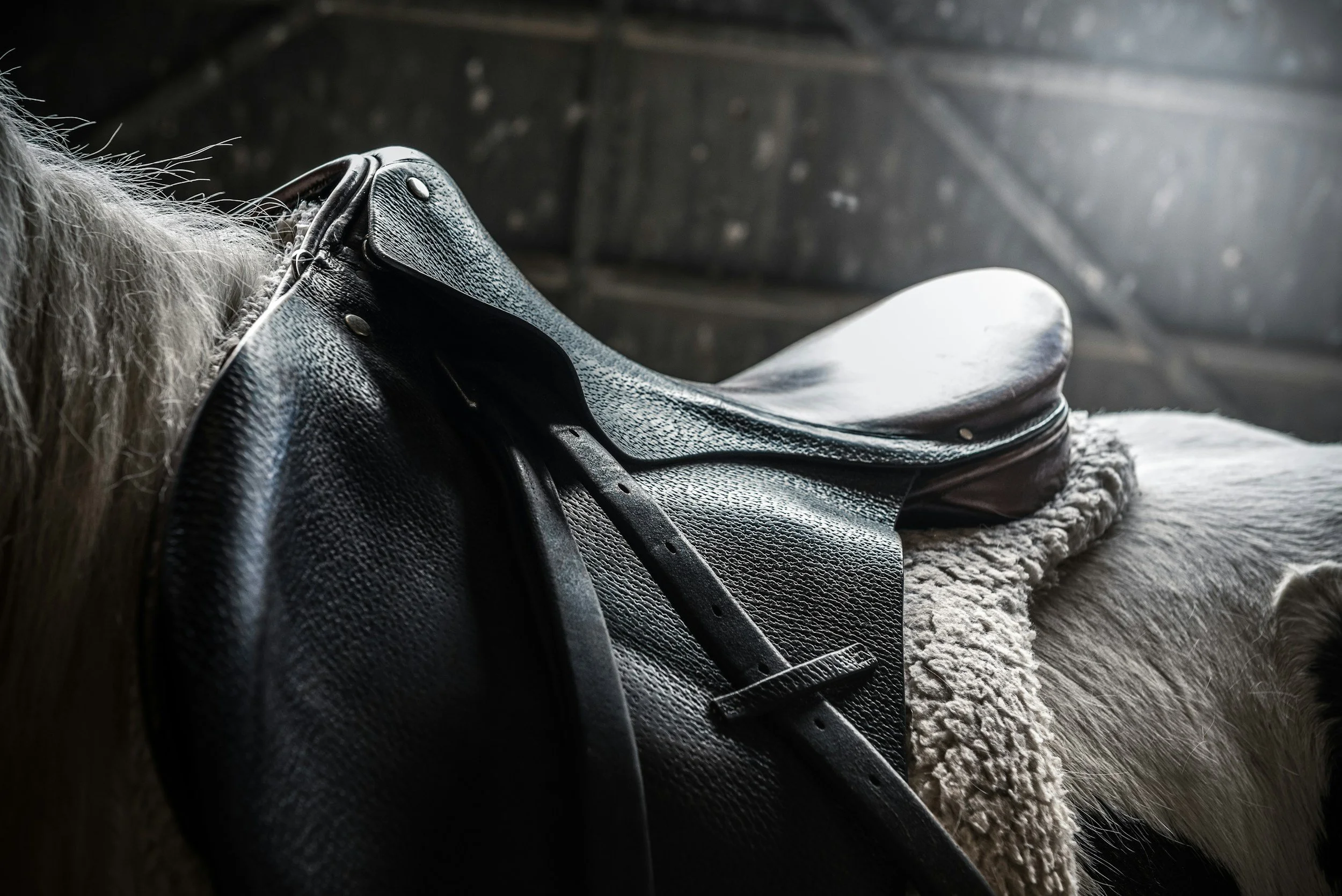
Saddle Ill-Fit A saddle that pinches, sits unevenly, or presses directly onto the spine causes chronic soft tissue damage. Over time, this leads to uneven muscle development, a hollow and tense posture, excessive tail swishing, and an unwillingness to collect or engage the hind end.
Why Your Horse Might Need a Veterinary Physiotherapy Session
Many owners believe physiotherapy is reserved solely for horses recovering from major surgery or explicit injuries. In reality, veterinary physiotherapy is one of the most effective, versatile tools available for solving complex behavioural problems, restoring comfort, and maintaining performance.
Your horse may benefit from a targeted physiotherapy session for several key reasons:
To Identify Unnoticed Compensatory Strain When a horse experiences minor discomfort in one area (such as a sore foot or stiff hock), they naturally shift their weight away from the pain. This causes them to overuse other muscle groups, leading to secondary spasms in the neck, back, or shoulders. Physiotherapy identifies and treats these hidden patterns before they spiral into severe behavioural resistance.
To Release Chronic Muscle Spasms and Restore Joint Mobility Long-standing tightness restricts range of motion and restricts blood flow, keeping muscle tissue sore and irritable. Through targeted manual therapy, myofascial release, and electrotherapies, physiotherapy directly releases tight muscle groups and restores fluid joint motion, immediately lowering the horse's pain levels.
To Support Rehabilitation After Injury or Surgery Following an acute injury, stall rest, or surgical procedure, horses lose muscle mass, core strength, and flexibility. Physiotherapy ensures scar tissue forms correctly, rebuilds symmetrical muscle strength, and safely guides your horse back into full work without causing re-injury.
To Optimise Athletic Performance and Prevent Future Injury For competition and working horses, regular maintenance physiotherapy sessions keep the musculoskeletal system functioning at its absolute peak. Spotting early signs of stiffness or asymmetrical loading allows us to make micro-adjustments before a true injury—or a sudden behavioural breakdown—occurs.
To Reset the Nervous System in Behavioural Cases For horses experiencing chronic pain-related stress, gentler, low-stress handling and therapeutic touch help shift their nervous system out of "fight or flight" and into "rest and repair." By working at the horse's pace, we help them learn that human touch and movement can feel good again.
The Role of Veterinary Physiotherapy in Behavioural Rehabilitation
At Lily Moffatt Veterinary Physiotherapy, my approach integrates physical healing with an acute awareness of behavioural needs. Treating a horse with behavioural concerns requires a unique, highly empathetic approach.
Here is how we bridge the gap between pain and performance during a session:
Patient, Low-Stress Assessment
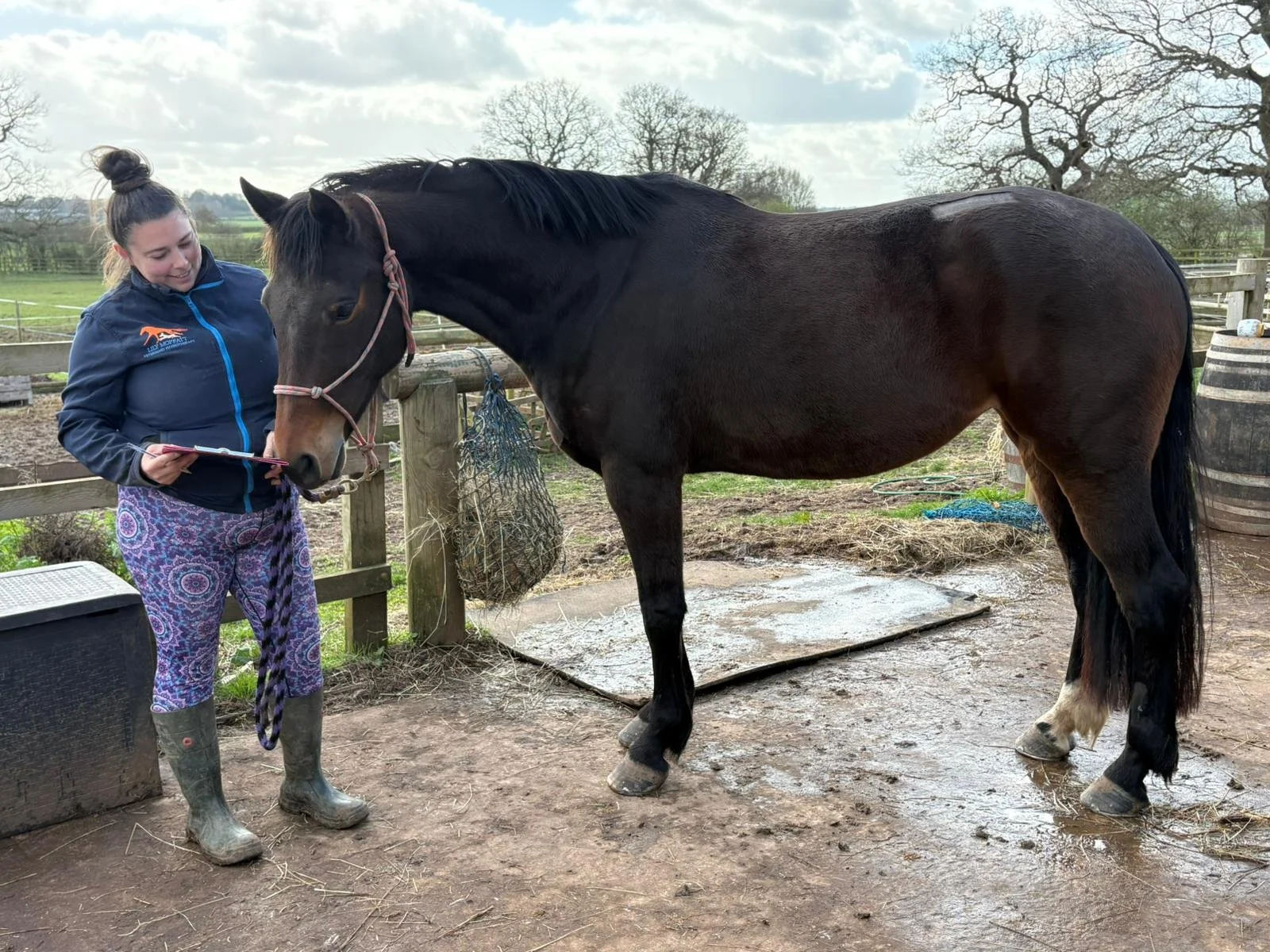
For horses that are anxious, fearful, or defensive around handling, forcing a physical assessment will only increase their stress hormones and exacerbate muscle tension. We work at your horse’s pace. This may mean starting with observation from a distance, using positive reinforcement, and applying gentle, non-threatening touch to build trust before deeper treatment begins.
Target Muscle Release & Joint Mobilisation
Using gentle manual techniques, myofascial release, and targeted joint mobilisation, we relieve painful muscle spasms and restore normal range of motion. Releasing chronic muscular tightness allows the nervous system to relax and begin the healing process.
Custom Rehabilitation & Exercise Plans
Physical recovery doesn't end when the therapy session is over. We design specific polework routines, long-reining exercises, and core-engagement work to help your horse rebuild weak muscles correctly and regain confidence in their movement.
How to Help Your Horse: Next Steps for Owners
If you suspect your horse’s behaviour is being driven by physical discomfort, do not lose hope. The key is to act early before pain becomes a habitual behavioural pattern.
Rule Out Acute Medical Issues: Always consult your primary veterinarian first to investigate potential lameness, dental problems, or gastric ulcers.
Audit Your Tack: Ensure your saddle, bridle, and bit are checked regularly by qualified professionals.
Book a Physiotherapy Assessment: A comprehensive veterinary physiotherapy evaluation can pinpoint areas of tightness, asymmetry, and underlying soreness.
Your horse isn't being bad—they are asking for help. By listening to their behavioural cues and taking a holistic, science-backed approach to their physical care, we can relieve their pain, restore their natural movement, and rebuild a happy, trusting partnership.
Scientific References & Further Reading
Equine Pain Face Identification Study:
Gleerup, K. B., Forkman, B., Lindegaard, C., & Andersen, P. H. (2015). An equine pain face. Veterinary Anaesthesia and Analgesia, 42(1), 103–114.
Equine Discomfort Behaviours & Ethogram:
Torcivia, C., & McDonnell, S. (2021). Equine Discomfort Ethogram. Animals, 11(3), 580.
Owner Recognition of Pain in Everyday Interactions:
Hall, C., & Kay, R. (2025). Owners' everyday interactions with their horse: Pain-related issues and those of veterinary concern. PMC Veterinary Research.
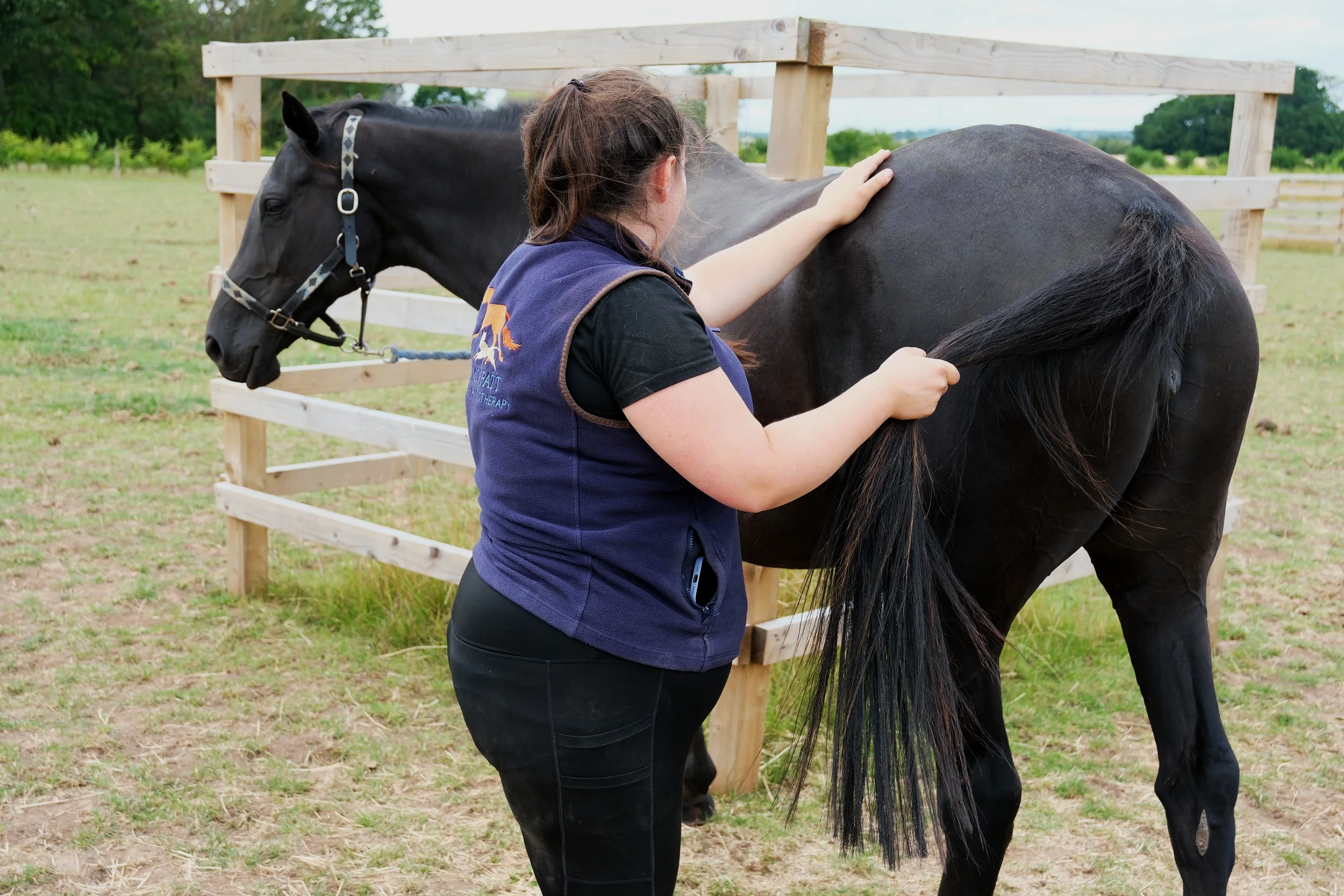
Lily Moffatt Veterinary Physiotherapy provides bespoke, compassionate physiotherapy care for horses and dogs, specialising in rehabilitation, performance development, and behavioural cases across the region. Contact us today to discuss how we can support your horse.